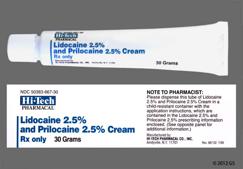
30 GRAMS
LIDOCAINE; PRILOCAINE is a topical anesthetic that causes loss of feeling in the skin and surrounding tissues. It is used to numb the skin before procedures or injections.
Lidocaine and prilocaine topical cream is used on the skin or in the genital area to cause numbness or loss of feeling before certain medical procedures. It is also used to prevent pain caused by an injection, the drawing of blood from a vein, or minor surgeries such as removing warts. This medicine contains a mixture of two topical local anesthetics (numbing medicines). It deadens the nerve endings in the skin.
This medicine is available only with your doctor's prescription.
A nurse or other trained health care professional will apply this medicine to you or your child before a medical procedure in a medical facility.
You may be taught how to apply this medicine to yourself or your child at home before the medical procedure. Use this medicine exactly as directed by your doctor. Do not use it for any other condition without first checking with your doctor. This medicine may cause unwanted effects if too much is used, because more of it is absorbed through the skin.
Do not apply this medicine to open wounds, burns, or broken or inflamed skin, unless directed otherwise by your doctor.
Be careful not to get any of this medicine in the eyes, because it can cause severe eye irritation. If any of the medicine does get into your eye, do not rub or wipe the eye, even if it hurts. Wash the eye with water and call your doctor right away.
Be careful not to get any of this medicine in the ears (especially in the middle ear), because it can cause serious hearing problems. If any of the medicine does get into your ear, wash the ear with water and call your doctor right away.
Be careful not to get any of this medicine in the mouth. Serious unwanted effects may occur if the medicine is swallowed.
To use:
Wash your hands with soap and water before and after applying the medicine.
Apply a thick layer of medicine to the area where numbness is needed. Do not spread the medicine on the skin.
Cover the medicine with a special bandage called an occlusive dressing. This will keep the medicine in place. Your doctor will give you the bandage or tell you what to use.
Seal the edges of the bandage to keep the medicine from leaking. Do not lift the bandage or disturb it. Keeping the medicine tightly covered helps it work properly.
For babies or young children, a second covering may be used to prevent them from touching the medicine.
Carefully watch your baby or child while the medicine is in place. Do not let them loosen or remove the bandage, touch the medicine, or put it in the mouth, eyes, nose, or ears.
Keep the bandage in place until you or your child arrive at the hospital or clinic.
Your doctor will remove the bandage and wipe the medicine off the skin before the medical procedure.
Along with its needed effects, a medicine may cause some unwanted effects. Although not all of these side effects may occur, if they do occur they may need medical attention.
Check with your doctor immediately if any of the following side effects occur:
Rare
Cough
difficulty with swallowing
large, hive-like swellings on the eyelids, face, lips, tongue, or genitals
severe dizziness or feeling faint
skin rash, itching, or hives
stuffy nose
tightness in the chest
troubled breathing
Incidence not known
Blisters on the skin at application site
blue or blue-purple color of lips, fingernails, mouth, or skin
blurred or double vision
dark urine
dizziness or drowsiness
fainting
feeling hot, cold, or numb
headache
irregular or fast heartbeat
muscle twitching or trembling
nausea
ringing or buzzing in the ears
seizures
unusual excitement, nervousness, or restlessness
unusual tiredness or weakness
vomiting
Some side effects may occur that usually do not need medical attention. These side effects may go away during treatment as your body adjusts to the medicine. Also, your health care professional may be able to tell you about ways to prevent or reduce some of these side effects. Check with your health care professional if any of the following side effects continue or are bothersome or if you have any questions about them:
More common
Burning, swelling, itching, or skin rash at application site
white or red skin at the application site
Other side effects not listed may also occur in some patients. If you notice any other effects, check with your healthcare professional.
Call your doctor for medical advice about side effects. You may report side effects to the FDA at 1-800-FDA-1088.
It is very important that your doctor check your or your child's progress closely to make sure this medicine is working properly. Blood tests may be needed to check for unwanted effects.
Do not use this medicine on a baby younger than 3 months of age unless your child's doctor tells you to. Young babies may have more unwanted effects if too much is used and absorbed through the skin. If you use this medicine on a baby younger than 3 months of age, blood tests may be needed to check for unwanted effects.
This medicine may cause serious types of allergic reactions, including anaphylaxis, which can be life-threatening and require immediate medical attention. Call your doctor right away if you or your child have a rash, itching, hoarseness, trouble with breathing or swallowing or any swelling of the hands, face, or mouth after you receive the medicine.
This medicine may cause a rare, but serious blood problem called methemoglobinemia. Call your doctor right away if you or your child develop a blue or bluish purple color on the lips, fingernails, or skin, or have headaches, dizziness, fainting, sleepiness, or trouble with breathing.
Using too much of this medicine or using it on a large area of your skin can cause serious unwanted effects. Remove the cream and contact your doctor right away if you or your child have any of these symptoms: lightheadedness, dizziness, vision problems, an irregular or slow heartbeat, difficulty with breathing, or convulsions (seizures).
During the time that the skin feels numb, serious injury can occur. Be especially careful to avoid injury until the numbness wears off and you or your child have normal feeling in the area. Do not scratch or rub the area, and do not allow very hot or very cold objects to touch it.
Do not take other medicines unless they have been discussed with your doctor. This includes prescription or nonprescription (over-the-counter [OTC]) medicines and herbal or vitamin supplements.



LowMed Price
11307 Manklin creek rd Unit 1
Berlin MD 21811
1-888-88 LOW MED PRICE
410 629 0112