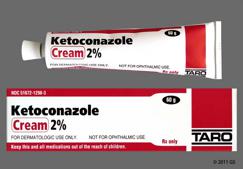
Ketoconazole (Extina, Nizoral) is a moderately priced drug used to treat certain kinds of fungal infections. It is more popular than comparable drugs. It is available in multiple generic and brand versions. Generic ketoconazole is covered by most Medicare and insurance plans, but some pharmacy coupons or cash prices may be lower.
Ketoconazole is used to treat infections caused by a fungus or yeast. It works by killing the fungus or yeast or preventing its growth.
Ketoconazole cream is used to treat:
Athlete's foot (tinea pedis; ringworm of the foot);
Ringworm of the body (tinea corporis);
Ringworm of the groin (tinea cruris; jock itch);
Seborrheic dermatitis;
"Sun fungus" (tinea versicolor; pityriasis versicolor); and
Yeast infection of the skin (cutaneous candidiasis).
Ketoconazole foam or gel is used to treat seborrheic dermatitis (scaly areas on your skin or scalp).
Ketoconazole 1% shampoo is used to treat dandruff.
Ketoconazole 2% shampoo is used to treat "sun fungus" (tinea versicolor; pityriasis versicolor).
This medicine may also be used for other fungus infections of the skin as determined by your doctor.
Most forms of this medicine are available only with your doctor's prescription. Some forms are available without a prescription. However, your doctor may have special instructions on the proper use for your medical condition.
It is very important that you use this medicine only as directed by your doctor. Do not use more of it, do not use it more often, and do not use it for a longer time than your doctor ordered. To do so may cause unwanted side effects or skin irritation.
This medicine is for use on the skin only. Do not get it in your eyes, nose, mouth, or vagina. Do not use it on skin areas that have cuts, scrapes, or burns. If it does get on these areas, rinse it off right away with water.
For patients using the cream:
Apply enough cream to cover the affected and surrounding skin areas, and rub in gently.
To help clear up your infection completely, it is very important that you keep using the cream for the full time of treatment, even if your symptoms begin to clear up after a few days. Since fungus or yeast infections may be very slow to clear up, you may have to continue using this medicine every day for up to several weeks. If you stop using this medicine too soon, your symptoms may return. Do not miss any doses.
For patients using the foam:
Wash your hands before and after using this medicine.
Do not spray the foam directly on your hand because it will begin to melt as soon as it touches your skin. Instead, spray the foam into the cap of the medicine can or other cool surface. Then dip your fingertips into the foam to pick up small amounts of the medicine, and apply to the affected skin areas. Gently massage the foam into your skin until it disappears.
If you are treating skin areas with hair, such as your scalp, move any hair away so the foam can be applied directly to the affected skin.
This medicine is flammable. Do not use it near heat, an open flame, or while smoking. Do not puncture, break, or burn the medicine can.
For patients using the gel:
Wash your hands before and after using this medicine.
Apply enough ketoconazole gel to cover the affected and surrounding skin areas, and rub in gently with your fingertips.
After applying this medicine, do not wash the affected area for at least 3 hours.
Cosmetics (makeup or sunscreens) may be used on the treated skin areas no sooner than 20 minutes after this medicine is applied.
This medicine may be flammable. Do not use it near heat, an open flame, or while smoking.
For patients using the 1% shampoo:
Wet your hair and scalp well with water.
Apply enough shampoo to work up a good lather and gently massage it over your entire scalp.
Rinse your hair and scalp with warm water.
Repeat application.
Rinse your hair and scalp well with warm water, and dry your hair.
For patients using the 2% shampoo:
Wet your hair and scalp well with water.
Apply the shampoo to the skin of the affected area and a wide margin surrounding this area.
Work up a good lather and leave it in place for 5 minutes.
Rinse your hair and scalp well with warm water, and dry your hair.
Along with its needed effects, a medicine may cause some unwanted effects. Although not all of these side effects may occur, if they do occur they may need medical attention.
Check with your doctor immediately if any of the following side effects occur:
Less common—For cream, shampoo, foam, or gel
Itching, stinging, burning, or irritation not present before use of this medicine
Rare—For cream, foam, or gel
Acne
bleeding from sore in the mouth
blistering, crusting, irritation, itching, or reddening of the skin
burning, crawling, itching, numbness, prickling, "pins and needles", or tingling feelings
cracked, dry, or scaly skin
discoloration of the fingernails or toenails
dizziness
eye dryness, irritation, or swelling
red rash with watery, yellow-colored, or pus filled blisters with or without thick yellow to honey-colored crusts
skin dryness, pain, rash, redness, or swelling
sore in the mouth or on the gums
swelling of the face
Rare—For shampoo
Hair loss and irritation
Incidence not known—For gel
Pain
Incidence not known—For shampoo
Blistering, burning, crusting, dryness, or flaking of the skin
burning sensation of the skin
burning, itching, redness, skin rash, swelling, or soreness at the application site
discoloration of the hair
dry skin
fast heartbeat
fever
hives
hoarseness
irritation
itching, scaling, severe redness, or soreness of the skin
joint pain, stiffness, or swelling
rash
shortness of breath
swelling of the eyelids, face, lips, hands, or feet
thinning of the hair
tightness in the chest
troubled breathing or swallowing
wheezing
Some side effects may occur that usually do not need medical attention. These side effects may go away during treatment as your body adjusts to the medicine. Also, your health care professional may be able to tell you about ways to prevent or reduce some of these side effects. Check with your health care professional if any of the following side effects continue or are bothersome or if you have any questions about them:
Less common—For shampoo or gel
Dryness or oiliness of the hair and scalp
headache
Rare—For shampoo
Abnormal hair texture
mild dryness of the skin
scalp pustules
Other side effects not listed may also occur in some patients. If you notice any other effects, check with your healthcare professional.
Call your doctor for medical advice about side effects. You may report side effects to the FDA at 1-800-FDA-1088.
It is very important that your doctor check your progress at regular visits. This will allow your doctor to see if the medicine is working properly and check you for any problems or unwanted effects that may be caused by this medicine.
Do not use this medicine for a skin problem that has not been checked by your doctor.
If your skin problem does not improve within 2 weeks for cutaneous candidiasis, pityriasis versicolor, tinea corporis, or tinea cruris; or 4 weeks for seborrheic dermatitis; or 4 to 6 weeks for tinea pedis, or if it becomes worse, check with your doctor.
Good health habits are also required for patients using the cream form of this medicine to help clear up your infection completely and to help make sure it does not return.
For patients using the cream for athlete's foot (tinea pedis; ringworm of the foot), the following instructions will help keep the feet cool and dry:
Avoid wearing socks made from wool or synthetic materials (e.g., rayon or nylon). Instead, wear clean, cotton socks and change them daily or more often if your feet sweat a lot.
Wear sandals or well-ventilated shoes (e.g., shoes with holes).
Use a bland, absorbent powder (e.g., talcum powder) or an antifungal powder between the toes, on the feet, and in socks and shoes one or two times a day. It is best to use the powder between the times you use the cream.
If you have any questions about these instructions, check with your doctor.
For patients using the cream for ringworm of the groin (tinea cruris; jock itch), the following instructions will help reduce chafing and irritation and will also help keep the groin area cool and dry:
Avoid wearing underwear that is tight-fitting or made from synthetic materials (e.g., rayon or nylon). Instead, wear loose-fitting, cotton underwear.
Use a bland, absorbent powder (e.g., talcum powder) or an antifungal powder on the skin. It is best to use the powder between the times you use ketoconazole cream.
If you have any questions about these instructions, check with your doctor.
The foam form of this medicine may make your skin more sensitive to sunlight. Use a sunscreen when you are outdoors. Avoid sunlamps and tanning beds.
This medicine may cause a serious type of allergic reaction called anaphylaxis. Anaphylaxis can be life-threatening and requires immediate medical attention. Call your doctor right away if you have a rash; itching; hoarseness; trouble breathing; trouble swallowing; or any swelling of your hands, face, or mouth while you are using this medicine.
Tell your doctor if you have the following symptoms while using the ketoconazole 2% shampoo: hair discoloration, abnormal hair texture, removal of the curl from permanently waved hair, hair loss, itching, burning sensation of the skin, or blistering, peeling, or redness of the skin.
Stop using this medicine and check with your doctor right away if you or your child have a skin rash, burning, stinging, swelling, or irritation on the skin.



LowMed Price
11307 Manklin creek rd Unit 1
Berlin MD 21811
1-888-88 LOW MED PRICE
410 629 0112